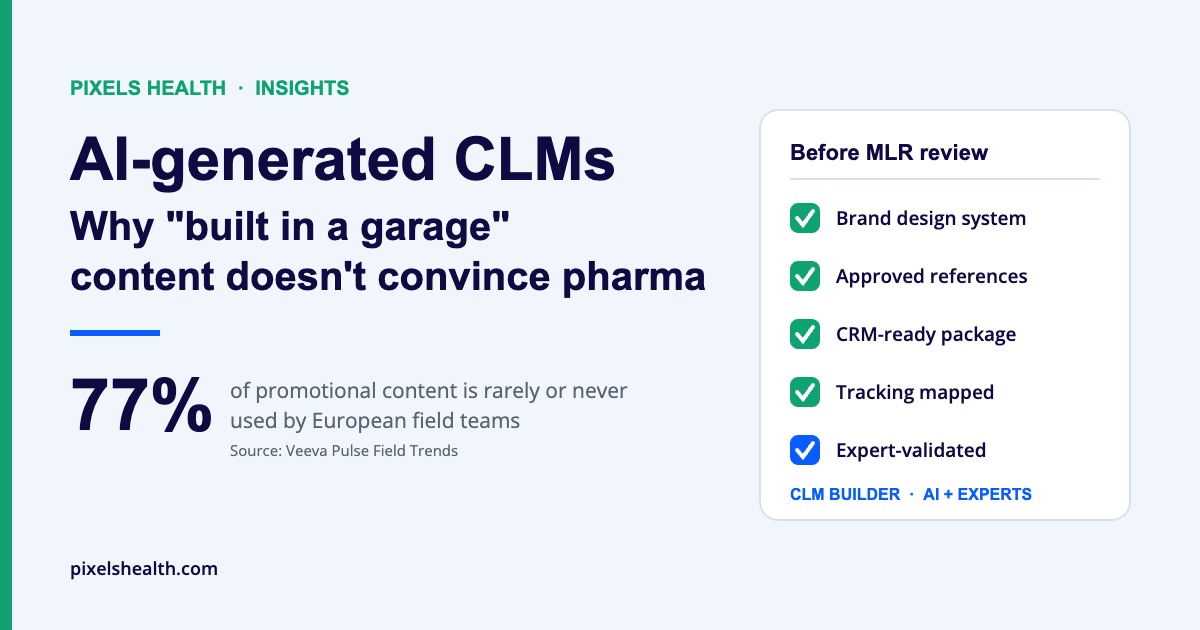
Localising an Approved CLM Across Europe: What Actually Takes Time
Insights · CLM & Localisation
Localising an Approved CLM Across Europe: What Actually Takes Time
Pixels Health · November 2026 · 6 min read
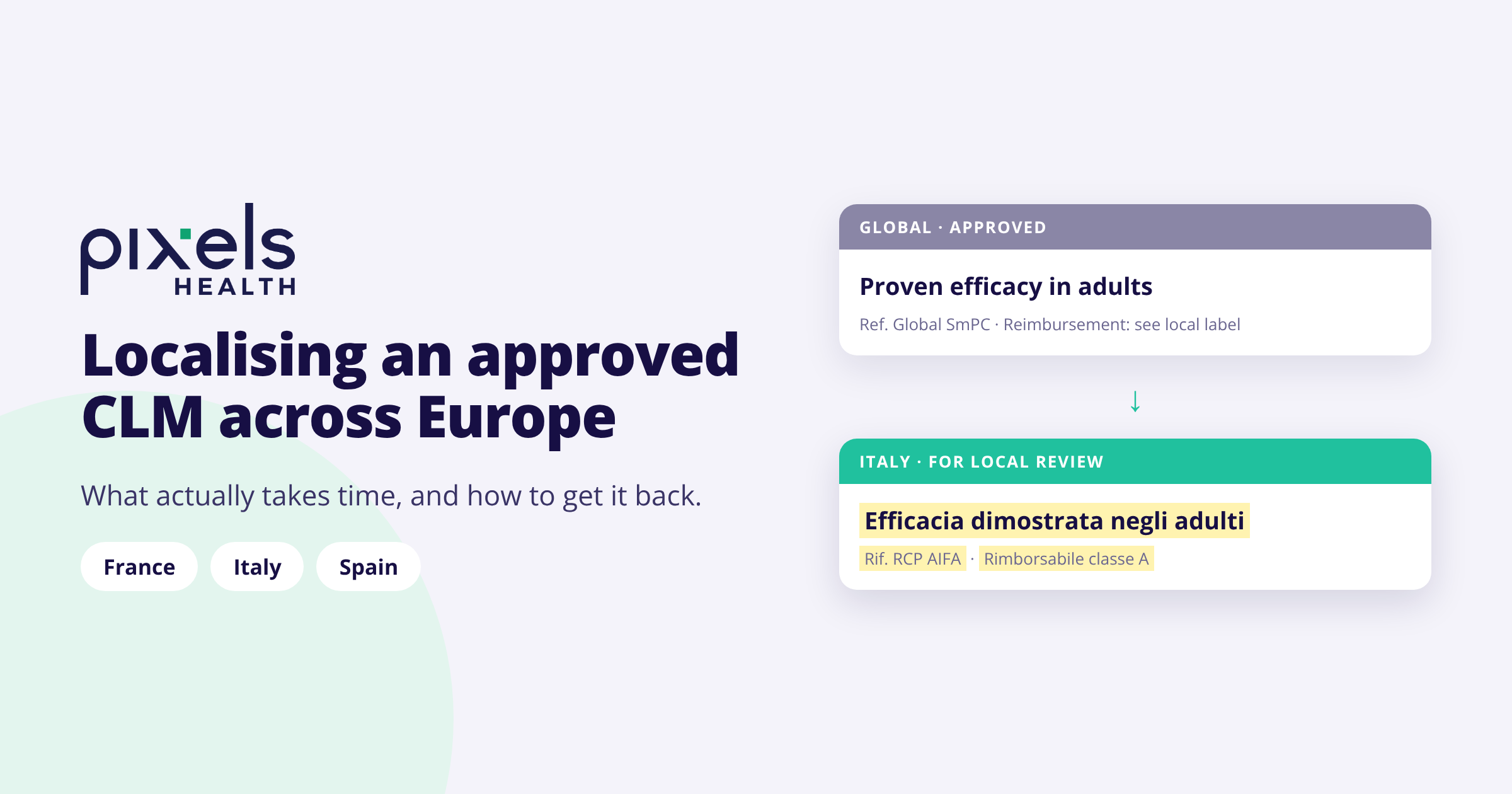
In short: adapting a global e-detailing deck for France, Italy or Spain is rarely “just a translation”. The adaptation itself is quick; the weeks are lost in unclear change requests, full re-reviews and versions circulating by email. Showing reviewers exactly what changed, and letting local teams handle small edits themselves, gets most of that time back.
The global deck is approved. Brand, medical and legal have signed it off, the Veeva package is ready, and the launch date is set. Then the affiliates receive it, and the clock starts again. In Paris, Milan and Madrid, the same CLM has to say slightly different things, and every one of those differences goes back through local review. This is where launch plans quietly slip.
1. What really changes from one country to another
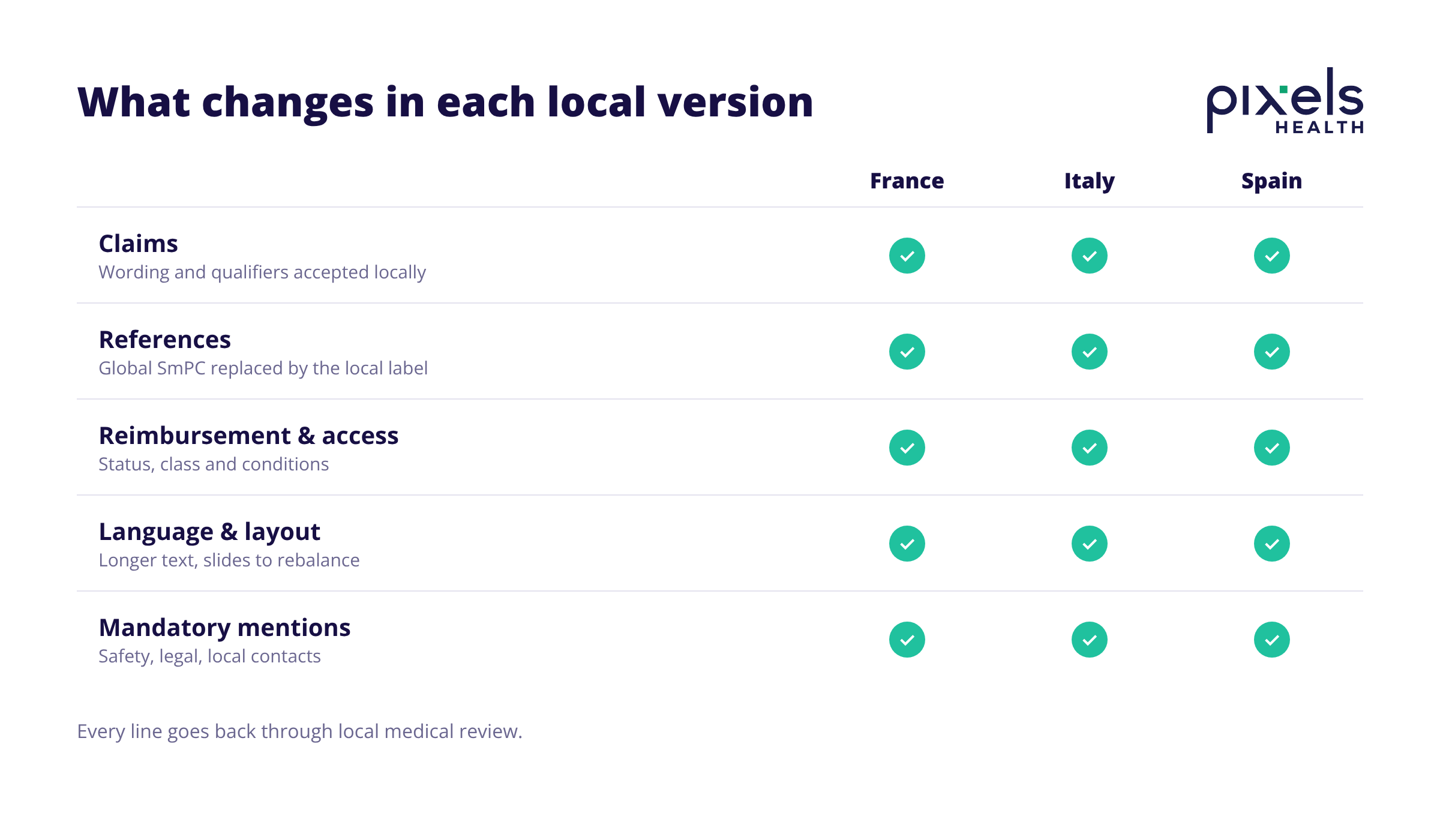
A local version is rarely a translation exercise. The changes that matter are the ones a medical reviewer checks line by line:
- Claims: wording approved at global level may not be acceptable locally, or may need a different qualifier.
- References: the global SmPC becomes the local label, with its own date and numbering.
- Reimbursement and access: status, class and conditions differ by country.
- Language and layout: French or Italian text usually runs longer than English and breaks carefully built slides.
- Mandatory local mentions: safety information, legal mentions, local contacts.
2. Where the weeks go
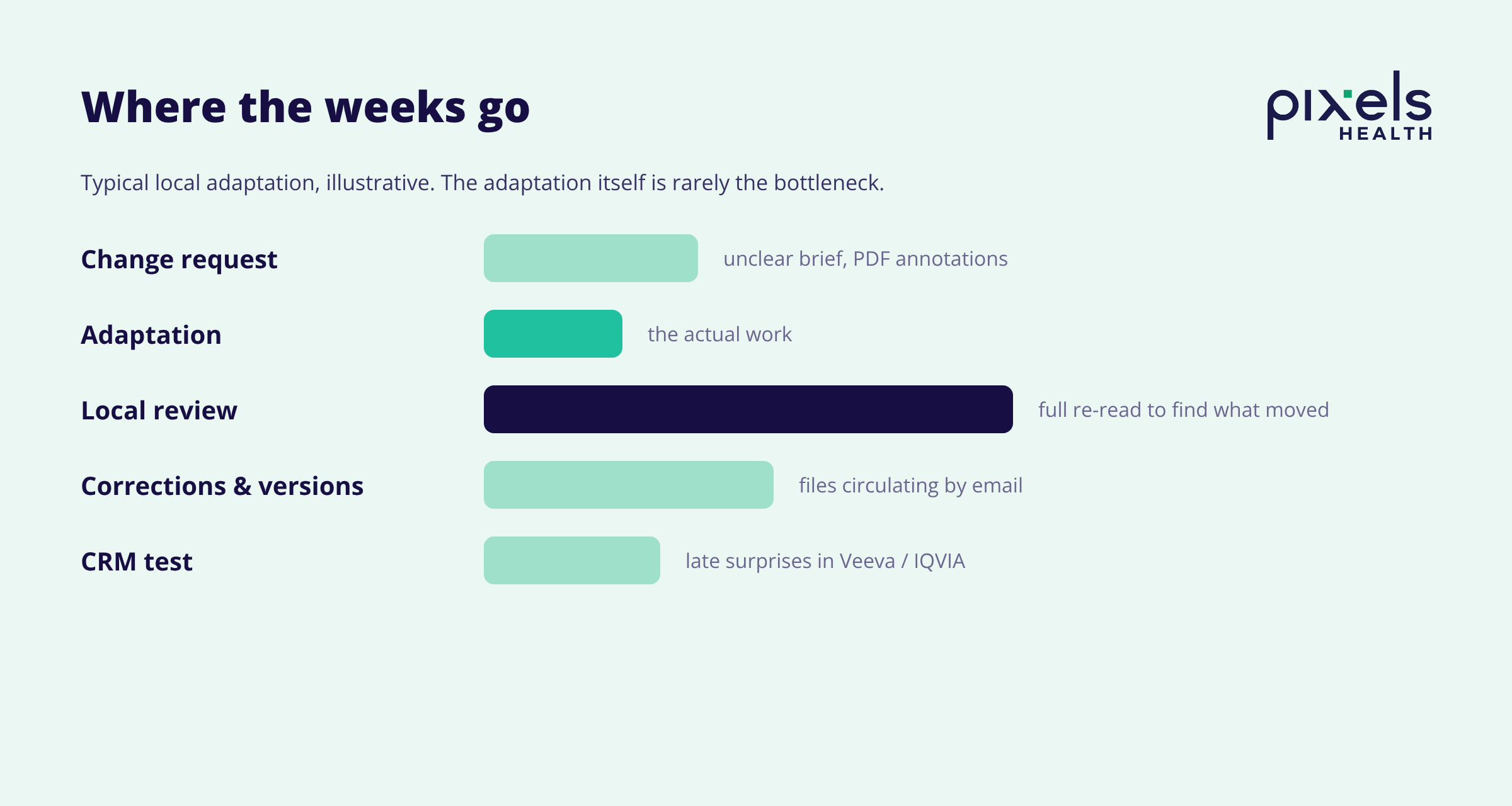
The adaptation itself is rarely the bottleneck. The time is lost around it:
- Unclear change requests: “update the references” arrives as an annotated PDF or a long email thread.
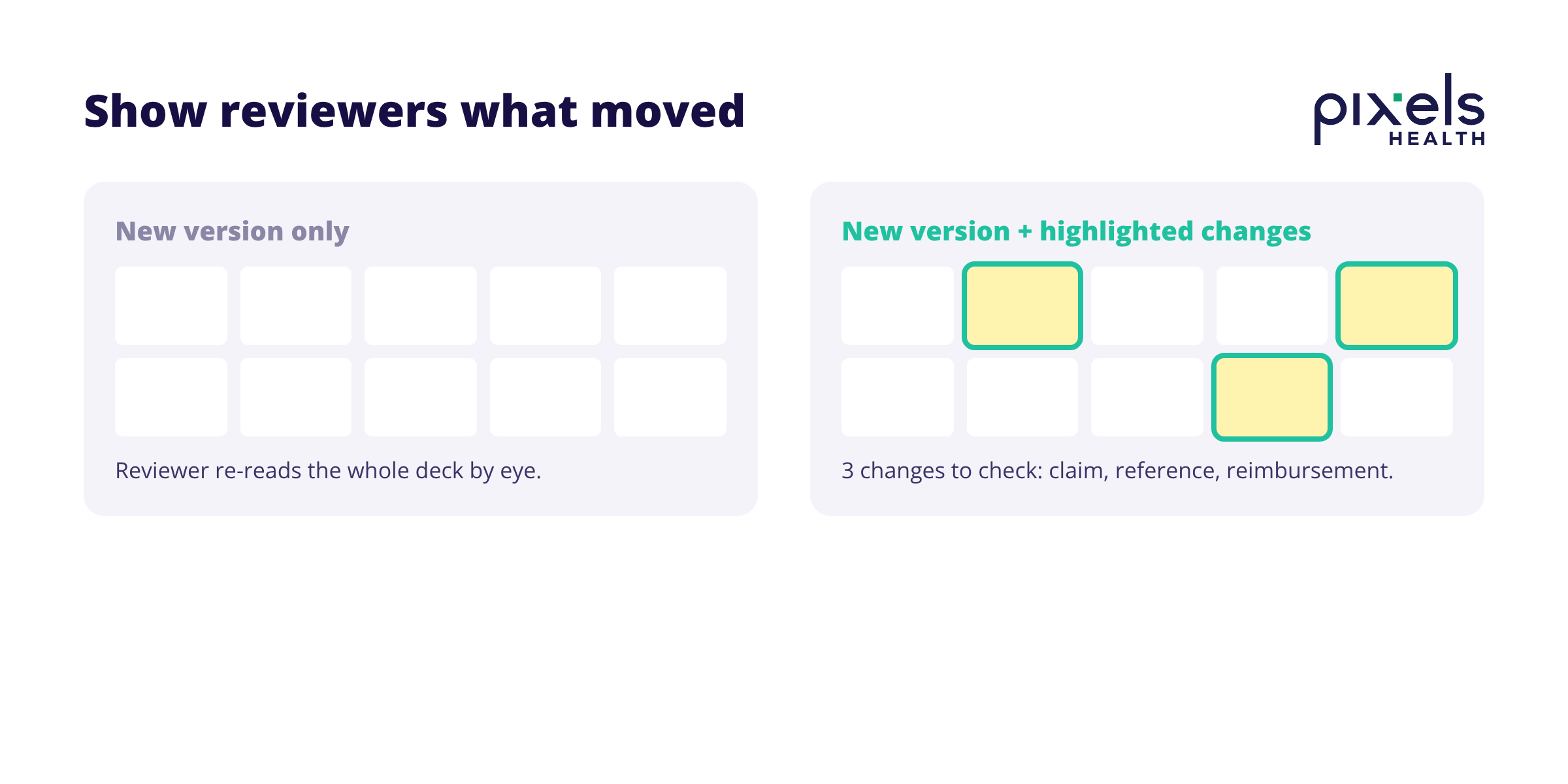
- Review loops: the medical team receives a full new version and has to re-read everything to find what moved.
- Version drift: several files circulate by email, and nobody is sure which one is the latest approved.
- Late technical surprises: the deck is approved, but the package misbehaves in Veeva or IQVIA, and a fix means another review.
3. Make the change visible, not just the result
The most effective lever we know is simple: show reviewers exactly what changed. Send the new version and a clear view of the differences: claim updated, reference replaced, reimbursement line added. A reviewer who sees three highlighted changes can sign off quickly. A reviewer who has to compare two full decks by eye needs time, and is right to take it.
- One structured brief per country, listing every change and its source.
- A side-by-side or highlighted preview for local review.
- One reference file, with a clear version history.
4. Give local teams the keys to small changes
Many local updates are small: a date, a reference, a dosage line, a contact. Routing each of them through an agency or a developer adds days for minutes of work.
This is why we built CLM Builder: marketing teams edit their e-detailing presentations themselves, preview them, and publish ready-to-deploy packages for Veeva or IQVIA. Through MCP, they can even ask their AI assistant to make the change in plain language. The approval flow stays exactly the same; only the waiting disappears.
Larger adaptations, new local modules or complex interactions are still best handled with a production partner. The point is to stop using that partner for changes that should take ten minutes.
5. A simple checklist before you localise
- Is the global file the latest approved version, and is it locked?
- Does each country have a written list of required changes, with sources?
- Will reviewers receive a highlighted view of what changed?
- Who can make small corrections after approval, and how fast?
- Has the package been tested in the target CRM before final review?
If the answer to any of these is “not really”, that is where your next launch will lose time.
Planning a launch across several European countries?
Pixels Health adapts, builds and deploys approved CLM and HCP email content for Veeva and IQVIA, from Geneva. Talk to us, or try CLM Builder in early access at clm.prezmanager.com.